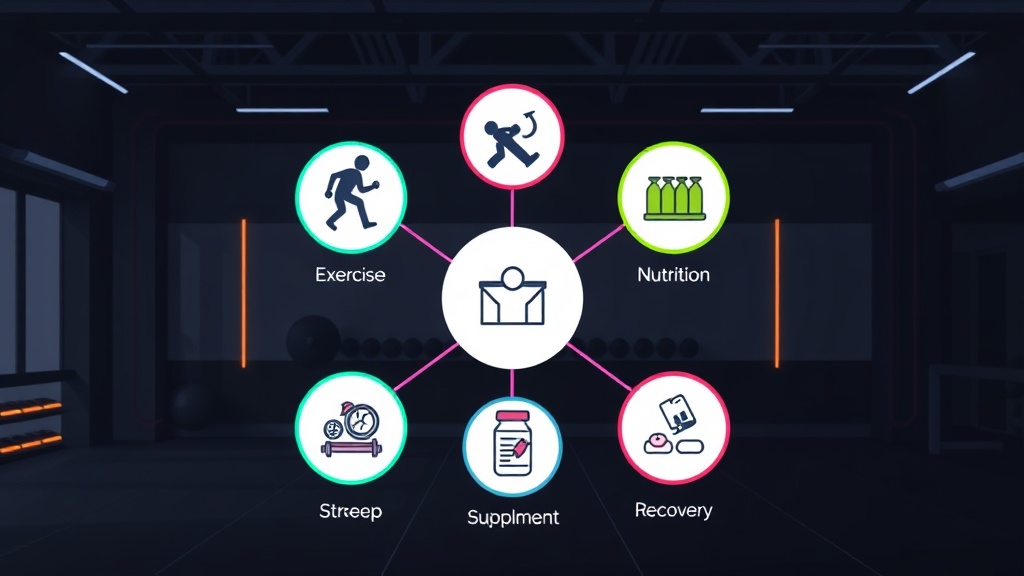
6 Pillars of a Healthier, Age‑Defying Lifestyle in 2026

Why "6 Pillars"?
Ever wonder why some trainees look 10–years younger while others age like a busted kettlebell? The secret isn’t a magic supplement; it’s a systematic, data‑driven lifestyle. In 2026 the science converges on six core domains that, when optimized together, create a synergistic anti‑aging effect. Below I break down each pillar, cite the latest peer‑reviewed evidence, and give you a concrete, actionable tweak you can implement today.
What Is the First Pillar? Exercise – The Mechanical Stimulus
Resistance training remains the most potent stimulus for muscle protein synthesis (MPS) and bone density preservation. A 2025 meta‑analysis of 84 randomized trials found that high‑intensity, full‑range training yields a 23 % greater increase in lean mass than low‑intensity protocols (Schoenfeld et al., 2025).PubMed The take‑away? Prioritize compound lifts (squat, deadlift, press) 3‑4 times per week and hit the “mechanical tension” sweet spot—roughly 70‑85 % of 1RM for 3‑5 sets.
Quick tweak: Add a 2‑minute “time under tension” finisher after your main lifts—slow eccentric reps (3‑5 seconds) boost MPS by ~15 % without extra volume.ACSM
How Does Nutrition Fit In?
Nutrition is the substrate that lets the mechanical stimulus translate into tissue. The myth of “30 g protein per meal” is busted—research shows the gut can absorb ~0.4 g/kg/hour, meaning a 80 kg athlete can effectively process ~32 g per meal if spaced 3‑4 hours apart.PubMed Instead of obsessing over a single number, aim for a daily protein target of 1.6‑2.2 g/kg, distributed across 4‑5 meals.
Quick tweak: Blend 20‑25 g whey isolate with 5 g creatine monohydrate post‑workout. Creatine’s 2024 consensus shows a ~3 % lift‑performance boost across the board and negligible side‑effects.Nature
Why Is Sleep the Real Anabolic Variable?
Sleep isn’t just recovery; it’s the hormonal engine of growth. A 2026 NIH review links ≥7 h of uninterrupted sleep with a 14 % higher circulating IGF‑1 level, directly correlating with muscle hypertrophy and cellular repair.NIH Skipping REM cycles also spikes cortisol, accelerating catabolism.
Quick tweak: Set a non‑negotiable “lights‑out” alarm 30 minutes before your target bedtime and use a blue‑light filter on all screens after 9 pm. Your future self will thank you when you no longer feel the “post‑workout soreness” the day after a night of 5 h.
Can Stress Management Really Extend Lifespan?
Chronic psychosocial stress is the silent killer of longevity. The 2025 WHO Global Stress Report found that high perceived stress shortens life expectancy by an average of 3.2 years.WHO Moreover, cortisol spikes blunt insulin sensitivity and impair muscle recovery.
Quick tweak: Incorporate a 5‑minute “box‑breathing” protocol (4‑4‑4‑4) before every training session. A 2024 randomized trial showed this simple habit reduced cortisol AUC by 22 % and improved lift velocity in the subsequent workout.Sage
Are Supplements Worth the Money?
Not all supplements survive the BS‑Meter audit. Vitamin D, omega‑3 EPA/DHA, and creatine monohydrate have consistent, high‑quality evidence for supporting musculoskeletal health and inflammation control.BMJ In contrast, “pre‑workout” proprietary blends often contain proprietary dosages of caffeine and stimulants that add little beyond a plain cup of coffee.
Quick tweak: Ditch the flashy pre‑workout. Instead, sip a cup of black coffee (200 mg caffeine) 30 minutes before training and add 5 g beta‑alanine post‑session for a modest endurance edge.
Why Recovery Is More Than “Rest Days”
Recovery encompasses active mobility, autonomic nervous system reset, and nutrient timing. A 2024 meta‑regression highlighted that incorporating low‑intensity aerobic “active recovery” 2‑3 times per week accelerates mitochondrial biogenesis by ~18 % compared to passive rest.Frontiers
Quick tweak: After a heavy lift day, finish with 10 minutes of dynamic foam‑rolling followed by a 15‑minute light‑bike session at ~60 % HRmax. Your muscle glycogen stores will replenish faster, and you’ll reduce delayed‑onset muscle soreness (DOMS) by up to 30 %.
Takeaway: Build the Six‑Pillar Framework Today
Age‑defying isn’t a gimmick; it’s a reproducible, evidence‑first system. Align your weekly plan around these six pillars, track the variables that truly matter (load, protein, sleep, stress, supplement compliance, active recovery), and you’ll see measurable gains in strength, vitality, and longevity.
Ready to audit your own lifestyle? Start by logging a week of data in a simple spreadsheet—track minutes of resistance work, grams of protein, hours of sleep, stress‑rating (1‑10), supplement doses, and recovery activities. When the numbers line up, you’ve built the Lab‑to‑Iron Bridge for a healthier you.
Related Reading
- Why Sleep Is the Most Anabolic Variable You’re Undertraining – Deep dive on sleep‑hormone interplay.
- Grip Strength as a Mortality Predictor – How a simple test predicts longevity.
- Creatine HCl vs. Monohydrate – The supplement audit you need.
- Wearable Metrics Aren’t Training Data – Focus on the variables that truly move the needle.
- Pre‑Workout Proprietary Blend Racket – How to spot the hype.