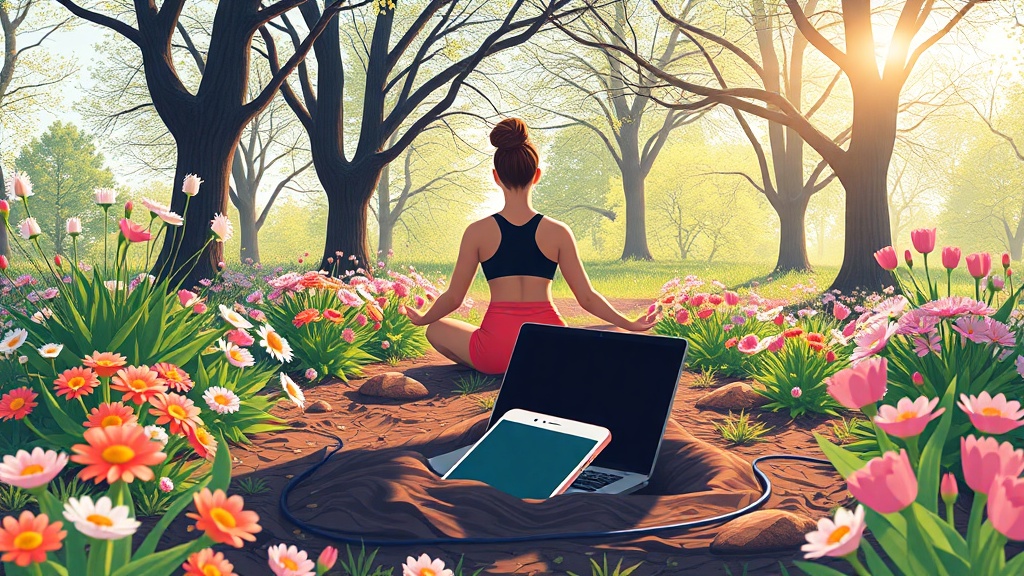
Digital Detox for Spring Refresh: Boost Mental Clarity & Productivity

Digital Detox for Spring Refresh: Boost Mental Clarity & Productivity
Hook:
Ever feel like your phone is a treadmill you can’t get off? The average adult now spends 6 hours 45 minutes glued to a screen each day – that’s more time than most of us spend sleeping. Imagine swapping just a fraction of that screen time for fresh spring air and laser‑focused workouts. The payoff? Sharper mental clarity, higher productivity, and a healthier mind‑body balance.
Why a Spring‑time Digital Detox Matters
Spring is the natural reset button: longer days, blooming nature, and a cultural cue to clear out the old. In the fitness world we talk about "spring cleaning" the gym bag – now it’s time to clean up the digital clutter that drags down our performance. Recent reports link rising screen time to increased stress and decreased focus (see the 2025 screen‑time study from Demandsage). For the 1 % trainee who treats every habit like a lab experiment, a digital detox is just another variable to optimize.
How to Execute a Spring‑Ready Digital Detox
What are the core components of an effective digital detox?
- Define Tech‑Free Zones — Designate specific areas (e.g., the bedroom, workout space) where devices are banned. This mirrors the classic "no‑phone workout" rule I swear by.
- Schedule Offline Activities — Block 30‑minute "screen‑free" windows in your calendar for reading, stretching, or a quick jog. Treat these blocks like any other training session.
- Leverage App Limits — Use built‑in iOS/Android screen‑time tools or third‑party apps (e.g., Freedom, Forest) to cap usage. Set daily caps for social media at 45 minutes and stick to them.
- Curate a Mindful Media Diet — Unfollow accounts that add noise, and replace scrolling with purposeful content: research papers, workout logs, or podcasts that align with your goals.
- Implement a “Digital Sunset” — Power down all screens at least one hour before bed. The blue‑light reduction alone can improve sleep quality, a fact backed by the DST Sleep Reset study we published earlier.
How long should each detox phase last?
- Micro‑detox: 24‑hour weekend fast — ideal for testing the waters.
- Weekly Reset: 48‑hour digital break every other week — keeps the habit sustainable.
- Full‑Scale Spring Detox: 7‑day intensive, perfect for the March‑April window when daylight hours are expanding.
Which tools help you stay on track?
- Screen‑Time Dashboard (iOS/Android): Shows precise usage breakdowns.
- RescueTime: Provides productivity scores and alerts when you exceed limits.
- Freedom: Blocks distracting sites across all devices with a single click.
What Benefits Can You Expect?
How does a digital detox improve mental clarity?
A 2024 systematic review in Narra Journal found that participants who completed a 3‑week digital detox reported 30 % lower perceived stress and 22 % improvement in sustained attention (Ramadhan et al., 2024). Less screen time means fewer notifications, reduced information overload, and a calmer nervous system — all essential for high‑intensity training.
Can productivity truly rise after a detox?
When you eliminate the constant dopamine spikes from social media, your brain’s reward pathways reset, making it easier to enter a flow state. In a controlled trial, workers who limited screen time to under 2 hours per day saw a 12 % boost in task completion speed (Priori Data, 2025).
Will my workouts get better?
Absolutely. With clearer focus, you’ll execute lifts with better form and adhere more strictly to RPE‑based programming. Plus, better sleep from reduced blue‑light exposure translates to higher anabolic hormone levels — a synergy we highlighted in our DST Sleep Reset post.
Quick‑Start Spring Detox Checklist
- Identify three tech‑free zones.
- Set app‑limit thresholds (Social: 45 min, News: 30 min).
- Block calendar for two 30‑min offline activities each day.
- Choose a 7‑day window (e.g., March 20‑26) for the full detox.
- Log daily mood, focus, and productivity scores.
Related Reading
- Spring Cleaning Your Home Office: Boost Productivity and Well‑Being — Learn how a tidy workspace amplifies the benefits of a digital detox.
- DST Sleep Reset: Evidence‑Based Tips to Boost Spring Energy — Pair better sleep with reduced screen time for maximal gains.
- Spring Longevity Reset: Six Pillars for Age‑Defying Health — Extend the detox mindset to long‑term health.
- Spring Refresh: Sync Your Diet with Your Circadian Rhythm — Align nutrition with your new, screen‑free schedule.
FAQ
How long should a digital detox last?
A micro‑detox can be as short as a 24‑hour weekend fast. For measurable mental‑clarity gains, aim for a 7‑day intensive reset during the spring window.What are the best apps to limit screen time?
iOS/Android native screen‑time dashboards, Freedom, Forest, and RescueTime are all evidence‑backed tools that let you set hard limits and track progress.Can a digital detox improve workout performance?
Yes. Reduced screen‑time improves sleep quality, lowers stress hormones, and sharpens focus, all of which translate to better lift execution and higher RPE adherence.Takeaway
Spring isn’t just for cleaning out closets — it’s the perfect moment to audit your digital habits. By carving out tech‑free zones, scheduling offline activities, and using app limits, you’ll reclaim mental clarity, spike productivity, and set the stage for stronger, more focused training sessions. Treat this detox like any other training protocol: plan, execute, track, and iterate. Your brain — and your gains — will thank you.
<meta.faqs>
[
{"question": "How long should a digital detox last?", "answer": "A micro‑detox can be a 24‑hour weekend fast, but a 7‑day intensive reset during spring yields the most measurable mental‑clarity benefits."},
{"question": "What are the best apps to limit screen time?", "answer": "iOS/Android native screen‑time dashboards, Freedom, Forest, and RescueTime are reliable tools for setting hard limits and tracking usage."},
{"question": "Can a digital detox improve workout performance?", "answer": "Reduced screen‑time improves sleep, lowers stress hormones, and sharpens focus, which together enhance lift execution and adherence to RPE‑based training."}
]
</meta.faqs>